
ITW – International Week
Each summer semester (around May or June depending on the holidays), our Faculty organises an International Week for our bachelor’s students.
During that week, guest lecturers from our partner universities offer eight to ten courses as core elective modules in parallel. Courses take place from Monday to Friday from about 9:00 to 18:00. Exams for the modules take place on Friday afternoon.
The courses are mainly aimed at students from the 6th semester or higher. For this week, all other courses for the 6th semester are suspended. Please contact your instructors in other courses of the semester, especially in the courses of your specialisation, if you are taking an International Week course. In the summer semester 2025, all other courses will not be suspended but only as needed.
International Week 2025
The next International Week will take place from 04 May 2025 to 08 May 2026. The choice of modules for the International Week will probably be made at the end of February 2026 or the beginning of March 2025 during the regular FWPM selection. The offers vary each year and there is no claim to take a certain course named here also within the following years.
ITW courses 2026
Agentic AI: Enabling Autonomous and Goal-Driven Intelligence (5003859, Dr. Manikandakumar M, Christ University, India)
This course is designed to introduce next-generation AI systems capable of autonomous decision-making, planning, reasoning, and self-improvement to students. Unlike traditional reactive AI models, Agentic AI systems can initiate actions, perform multi-step tasks, collaborate with other agents, and adapt to dynamic environments. This course equips learners with both theoretical foundations and hands-on experience in building autonomous AI agents.
The learners will explore agent architectures, cognitive models, memory systems, tool-use capabilities, multi-agent collaboration frameworks, and practical agent deployment workflows. Through lab exercises using modern frameworks such as Flowise, LangChain, AutoGen Studio, CrewAI, and AgentOps, students will build goal-driven agents, evaluators, planners, and multi-agent systems. Real-world applications from business automation, sustainability, smart systems, and software engineering will be emphasised throughout.
The course ends with a practical assessment where participants design, implement, and demonstrate a functional autonomous agent. By integrating theory, hands-on experimentation, and evaluation, this course provides a strong foundation for applying Agentic AI in academic, industrial, and research environments aligned with the green digital transformation.
Business Data Visualization with Power BI and AI (Beauhla Soundarabai, Christ University, India)
In this course, students will learn how to transform and visualize business data using Power BI, integrating advanced features such as AI-driven insights. Students will gain skills in data cleaning and modeling, designing interactive dashboards, and deriving actionable business insights. Through hands-on exercises, students will develop practical expertise in the following areas:
- Introduction to Business Data Visualization: Power BI overview and setup, Navigating Power Query Editor.
- Data Transformation and Modeling for Analytics: Using Power Query for Data transformation, Relationships between Data models.
- Building Interactive Dashboards: Data preparation with Power Query, Basic visuals, usage of interactive elements: Filters, slicers, Drill-throughs, visualising data in business dashboards using Power BI.
- Incorporating AI Insights: Using Power BI’s built-in AI insights: Influencers, Decomposition Tree and Q&A features.
- Case Study: Perform end-to-end analysis and create interactive dashboard on Stock Market Dataset to identify key trends, patterns, and actionable insights.
Computer Networks and Cyber Security (Siavosh Haghighi Movahed, Sheffield Hallam University, UK)
This module is designed to provide students with the knowledge and skills necessary to design, implement, and manage secure computer networks.
In this module, students will gain a solid foundation in establishing and maintaining robust network infrastructures. Simultaneously, the module addresses the critical aspect of securing these networks against potential threats, ranging from cyberattacks to data breaches. Through a combination of theoretical concepts and practical exercises, students will develop the expertise needed to identify vulnerabilities, implement security measures, and formulate strategies to safeguard information assets in the interconnected world of computer networks.
In addition to providing a broad range of fundamental computer networking and security knowledge for all IT careers, this module will also provide students with an opportunity to further self-study and gain conceptual knowledge and practical skills required for 200-301 Cisco® Certified Network Associate (CCNA®) exam.
Computer Networks for Practical Engineers (5003861, Prof. Dr. Bishnu Prasad Gautam, Suwa University of Science, Japan)
This course provides students with practical knowledge and skills in computer networks, focusing on how networks are constructed, configured, and operated by computer network engineers. The course begins at the physical layer with hands-on construction of LAN (Ethernet) cables, and then introduces fundamental concepts such as classful and classless IP addressing, switching, and routing.
Students will learn static routing as a foundation, followed by dynamic routing protocols including RIP, OSPF, and BGP through practical laboratory exercises. The course also introduces essential network security concepts, with particular attention to firewalls and basic network protection mechanisms required in real network environments.
In the final part of the course, students are introduced to next-generation networking paradigms, such as IoT, Software-Defined Networking (SDN), and Quantum Networks, providing insight into future network evolution. In addition to delivering a broad foundation in computer networking for IT and engineering careers, this course also supports self-study towards the 200-301 Cisco Certified Network Associate (CCNA) exam by developing relevant conceptual understanding and practical skills.
Data Analytics (5003862, Dr. Jaani Väisänen, LAB, Finland)
This course gives business students a practical, no coding introduction to data analytics using Altair AI Studio. You'll learn to build an end to end analytics workflow-from importing and preparing data to selecting variables, building models, evaluating performance, and interpreting results for business decisions.
- Course kickoff, AI Studio workflow basics, and practical data preparation for modelling
- Regression
- Clustering
- Tree models
- Association analysis
Emotional and Persuasive Design in E-Commerce (Petteri Markkanen, LAB, Finland)
The course aims to guide students in designing and building an E-Commerce website over the course of a week, applying principles of good user experience with a particular focus on theories and strategies related to emotional and persuasive design. During the week, students test each other’s projects using various methods, such as interviews and observational studies, in addition to employing analytics tools to enhance their understanding.
Course Outline
- Monday: Introduction to basic operations and User Experience (UX) principles. Task: Set up the E-Commerce website for specific target groups and create user personas.
- Tuesday: Emotional Design. Task: Design and implement the E-Commerce website, incorporating Emotional Design strategies tailored to the selected target groups and personas.
- Wednesday: Persuasive Design. Task: Conduct user tests, apply Persuasive Design strategies, and develop the next iteration of the E-Commerce website.
- Thursday: Growth Hacking planning for the E-Commerce website Task: Conduct user tests and finalize the E-Commerce website with its final iteration. Develop a plan for improving the website, including strategies for growth and optimization.
- Friday: Presentation and Reflection. Task: Present the completed websites and key findings. Summary: Recap and reflect on the process.
The course concludes with an exam.
Applying theoretical concepts in practice during the course, combined with students testing each other's E-Commerce websites, provides valuable insights. This process helps students recognize and understand different user groups, learn how to emotionally engage them, and effectively use emotions and persuasion in the E-Commerce context.
Ethical AI Hacking (Paulius Baltrusaites, Kauno Kolegija, Lithuania)
This course provides a comprehensive understanding of artificial intelligence (AI) security, with a focus on ethical hacking principles, attacks on AI systems, and defence strategies. Students will gain practical knowledge of key threats such as data poisoning, model inversion and backdoor attacks. They will understand how to design secure and ethically responsible AI solutions. Using advanced tools such as the Adversarial Robustness Toolbox, CleverHans and others, students will learn to identify vulnerabilities and implement protection methods.
Learning Objectives:
- Understand the key security challenges and threats in AI systems.
- Learn to perform ethical hacking attacks such as data poisoning, model inversion and backdoor attacks.
- Analyse and apply defence strategies such as differential privacy, anomaly detection and adversarial model training.
- Promote an ethical approach to AI security, guided by legal regulations and moral principles.
Recommended prerequisites for students: Python, ML/AI basics
Practical Assessments (Hands-On Labs) formats:
- Red Team vs. Blue Team.
- AI Model Building & Defense using tools like Adversarial Robustness Toolbox or CleverHans to secure or attack AI systems.
International Digital Marketing (5003863, Sami Lanu, LAB, Finland)
Digital Marketing Strategies
Digital marketing channels (owned, earned, paid)
Search Engine Optimisation
Digital marketing target group segmentation
Social media marketing (including TikTok)
Digital marketing targets, analytics and metrics
Next-Generation Ethical Hacking and Cyber Forensics (5003864, Prof. Dr. Minal Moharir, RV College, India)
1 Introduction to Ethical Hacking and Vulnerability Analysis Fundamentals of key issues in the information security world, including the basics of ethical hacking,. Ehiical Hacking Life cycle, Different vulnerability assessment and Penetration testing tools, overview of AI in offensive and defensive security
2. Social engineering and session hijacking Social engineering concepts and techniques, including how to identify theft attempts, use of generative AI for phishing content and deepfakes
Web server attacks, including a comprehensive attack methodology used to audit vulnerabilities in web server and web applications. web application hacking methodology,.
3 IoT and Cloud Hacking IoT and Cloud attacks, hacking methodology, hacking tools, IoT and cloud security techniques and tool
4. Introduction to Cyber Forensics: Principles of Cyber Forensics, Chain of Custody and Evidence Handling, Introduction to Digital Evidence Types, Importance of Forensic Image Creation, introduction to machine-learning-supported triage of logs, files and network traces
5 File System and Disk Forensics: Analyzing File Systems: FAT, NTFS, EXT, Data Recovery Techniques and Deleted File Recovery. Identifying Hidden Files and Metadata
Network Forensics: Basics of Network Traffic Analysis, Identifying Suspicious Network Activity, Packet Analysis and Monitoring Logs
Principles of Autonomous Drones (Prof. Dr. Marcel Kyas, Reykjavik University, Iceland)
- Explain the principles of motion control.
- Explain basic concepts of perception, from classic to deep learning approaches.
- Explain principles of localisation and SLAM.
- Explain navigation algorithms, planning, decision making.
Quantum Computing (5003865, Dr. M.S Divya Rani, Presidency University, India)
This course provides a comprehensive introduction to the principles, mathematical foundations, hardware concepts, and programming tools of quantum computing. Students will explore qubits, superposition, entanglement, quantum gates, algorithms, noise models, error correction, and real-world applications. Hands-on sessions using Qiskit enable learners to construct and simulate quantum circuits and run programs on IBM Quantum devices.
- foundations of quantum computing
- quantum gates and quantum circuits
- quantum algorithms
- quantum hardware, noise & error correction
- applications, future trends & quantum programming
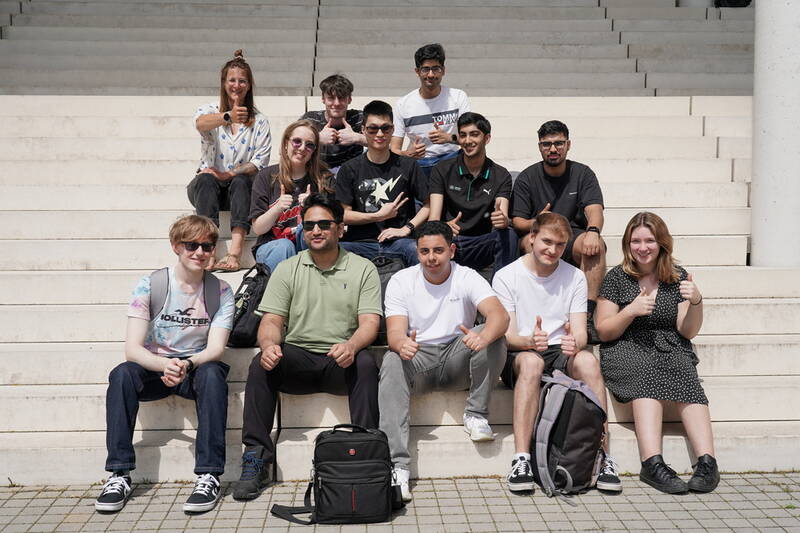
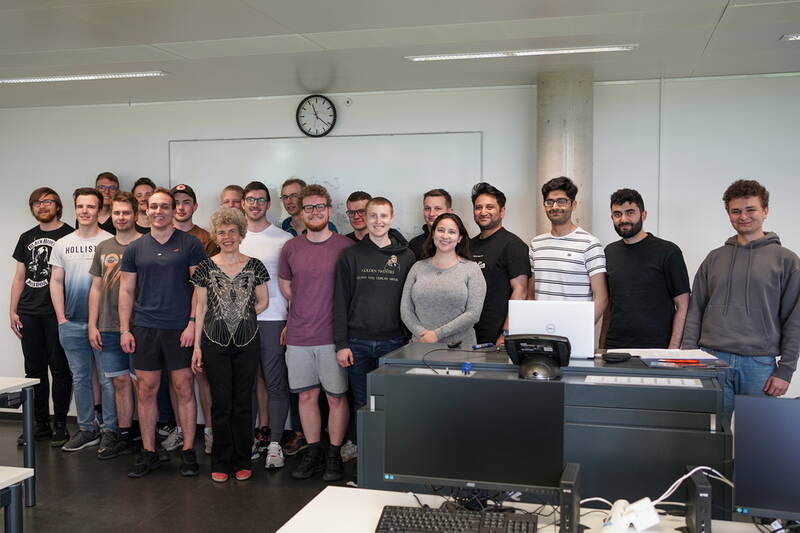
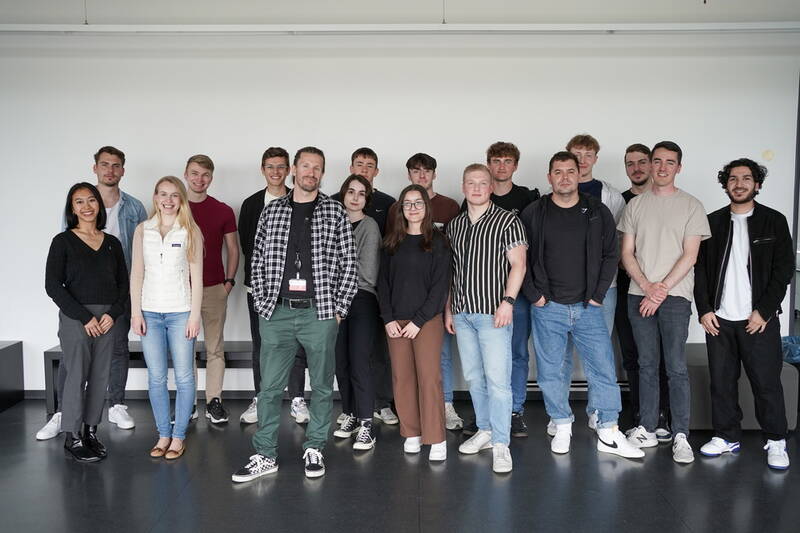
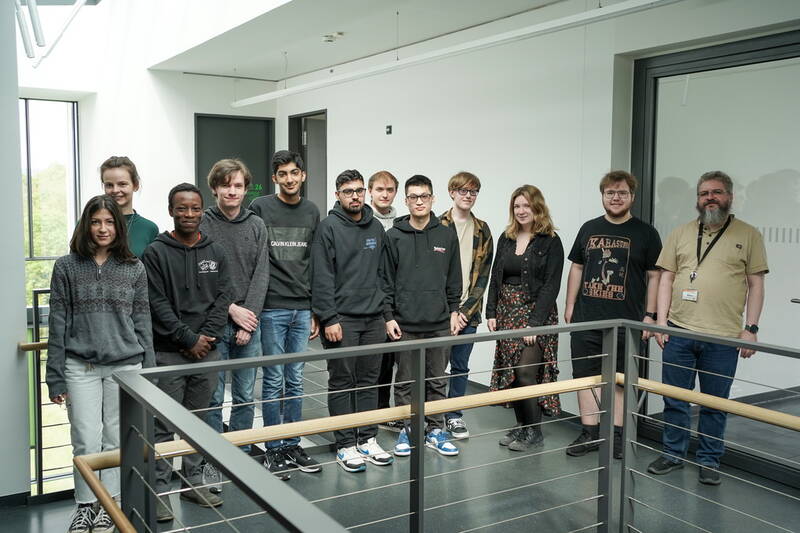
Impressions from the International Week 2025
The International Week took place from 12.05.2025 to 16.05.2025.
Impressions from the International Week 2024
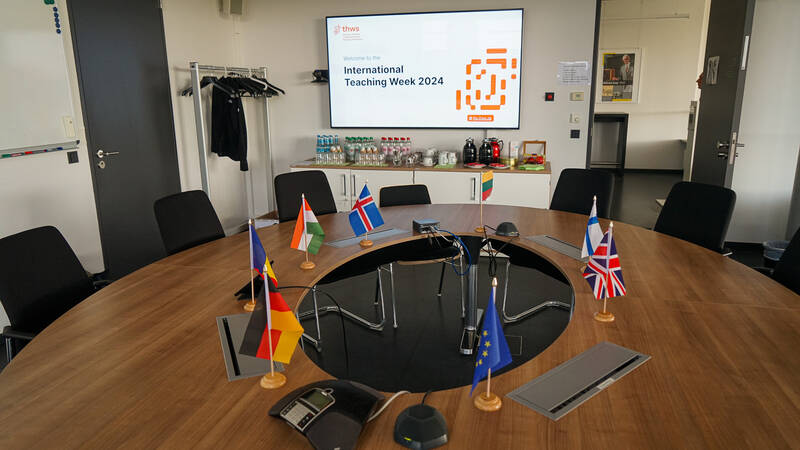
The International Week took place from 03.06.2024 to 07.06.2024.
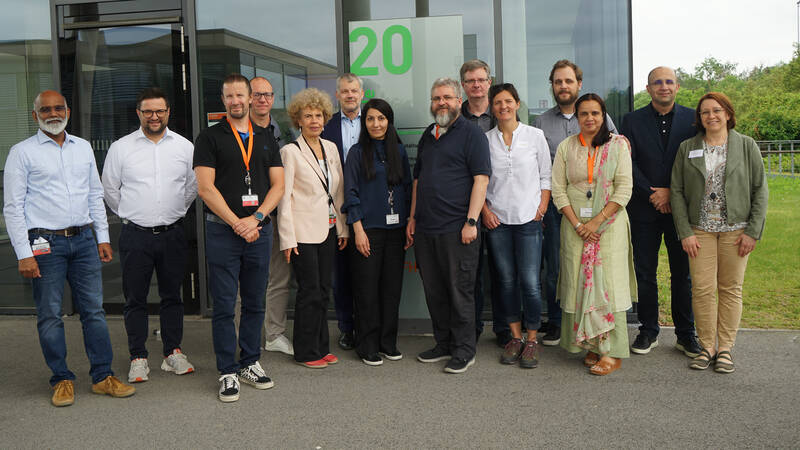
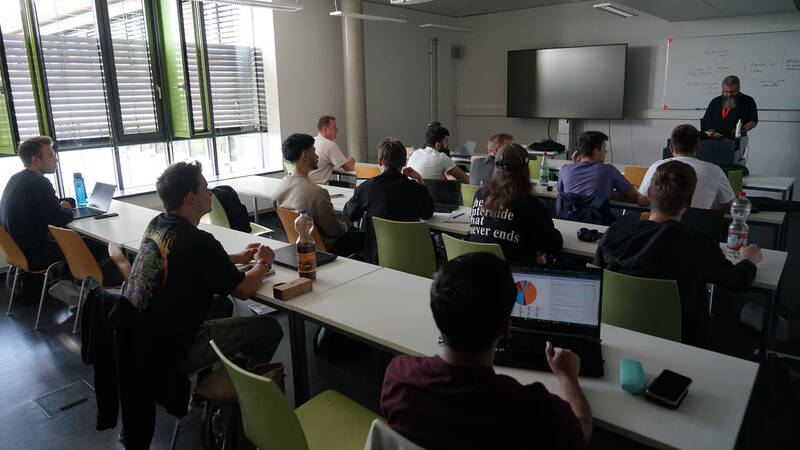
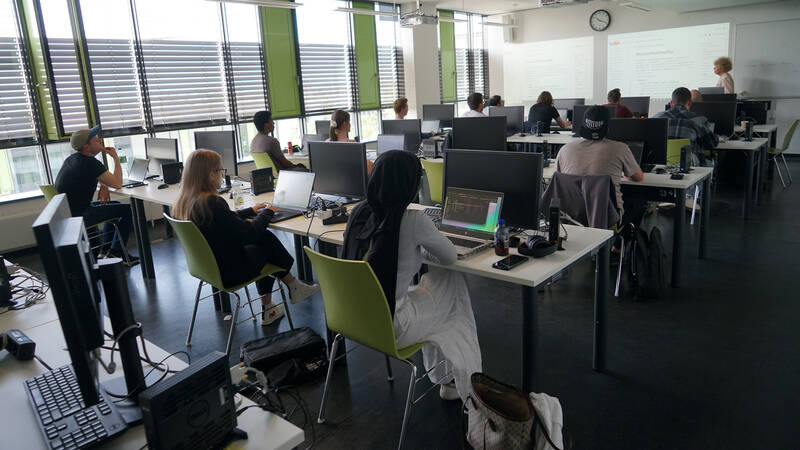
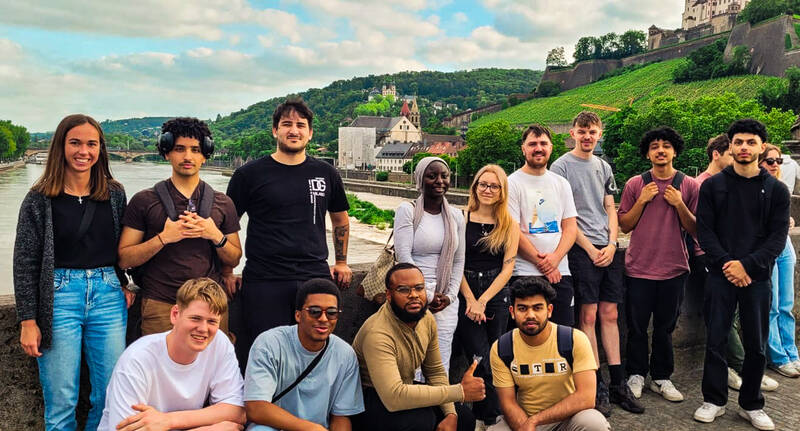
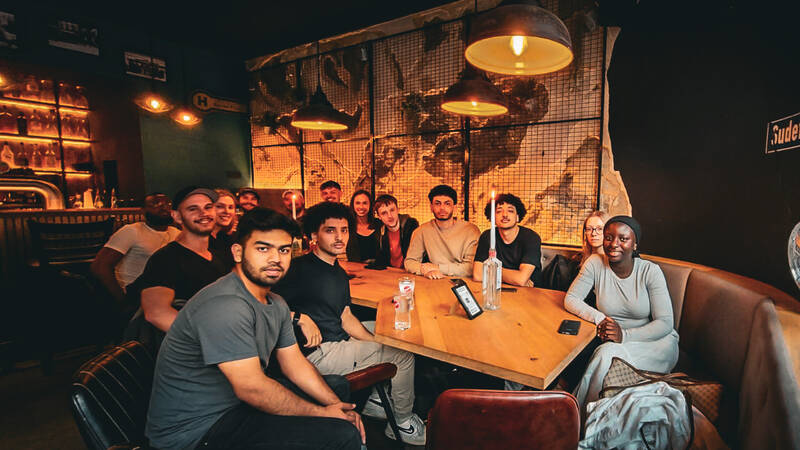
In 2024, students of all Bachelor's programs from the sixth semester onwards could choose from five electives taught by lecturers from our partner universities. The guest lecturers are already veterans. Already in previous years, we had the pleasure to welcome Prof. Dr. Dana Simian (Lucian-Blaga-University Sibiu, Romania), Prof. Dr. Marcel Kyas (Reykyavic University, Iceland), Jaani Väisänen (LAB University of Applied Sciences, Finland), and SK Iyer (Infosys, Indien) during the International Week. Dr Maryam Bagheri (Sheffield Hallam University, England), Siavosh Haghighi Movahed (Sheffield Hallam University, England), and Minal Moharir (RVCE, Indien) were new to the programme this year.
A total of about 80 students participated in the modules, which lasted from Monday, June 3 to Friday, June 7. The final exams for the modules were held on Friday.
For the third year in a row, 14 students from our partner university Sheffield Hallam University (SHU) were among the participants of the International Week. The students from the Department of Computing took part in the modules together with the FIW students as part of a short-term mobility program. The English-language course offering opens the doors for further short-term stays of this kind. The students were integrated into the modules and were able to establish contacts and friendships with the FIW students.
This year, FIW was once again able to present itself as a cosmopolitan host for guests from all over the world with the International Week - and bring the world into our seminar rooms. All in all, a wonderful, albeit work-intensive week for all involved, which, as always, was over far too quickly.
Impressions from the International Week 2023
The International Week took place from 22.05.2022 to 26.05.2022.
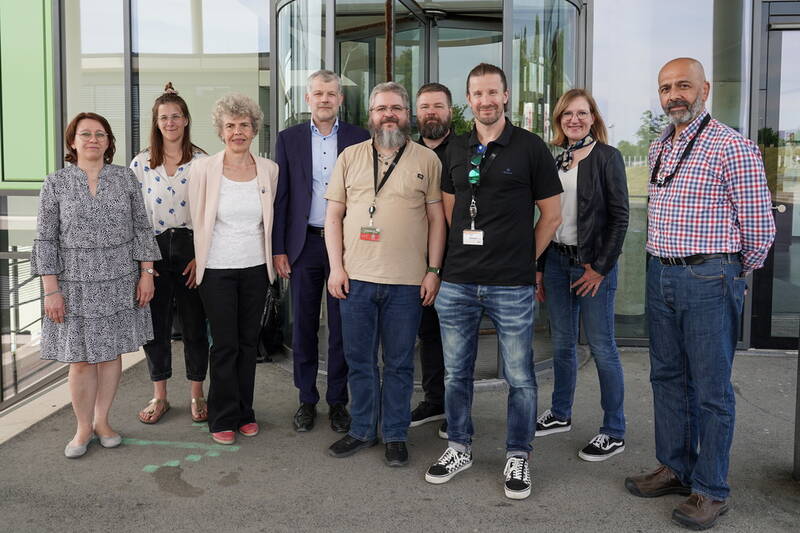
In 2023, students of all Bachelor's programs from the sixth semester onwards could choose from five electives taught by lecturers from our partner universities. The guest lecturers are already veterans. Already in previous years, we had the pleasure to welcome Dr. Mo Rezai (Sheffield Hallam University, England), Prof. Dr. Dana Simian (Lucian-Blaga-University Sibiu, Romania), Prof. Dr. Marcel Kyas (Reykyavic University, Iceland), and Sami Lanu (LAB University of Applied Sciences, Finland) during the International Week. Jaani Väisänen (LAB University of Applied Sciences, Finland) was new to the programme this year.
Dr. Rezai taught Advanced Web Applications, Prof. Dr. Simian taught Introduction to Machine Learning, Prof. Dr. Kyas taught Principles of Autonomous Drones, Sami Lanu taught Online Marketing Management, and Jaani Väisänen Holistic E-Business Setup. A total of about 60 students participated in the modules, which lasted from Monday, May 12 to Friday, May 26. The final exams for the modules were held on Friday.
TFor the second year in a row, eleven students from our partner university Sheffield Hallam University (SHU) were among the participants of the International Week. The students from the Department of Computing took part in the modules together with the FIW students as part of a short-term mobility program. The English-language course offering opens the doors for further short-term stays of this kind. The students were integrated into the modules and were able to establish contacts and friendships with the FIW students.
This year, FIW was once again able to present itself as a cosmopolitan host for guests from all over the world with the International Week - and bring the world into our seminar rooms. All in all, a wonderful, albeit work-intensive week for all involved, which, as always, was over far too quickly.
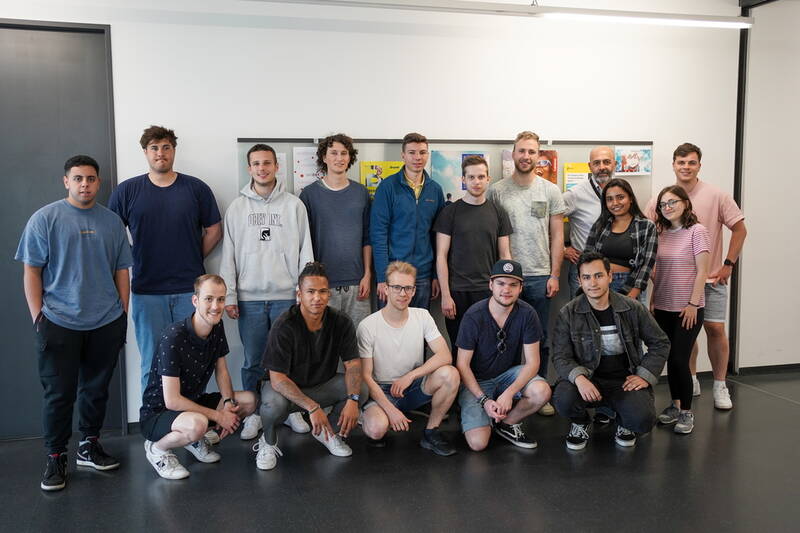
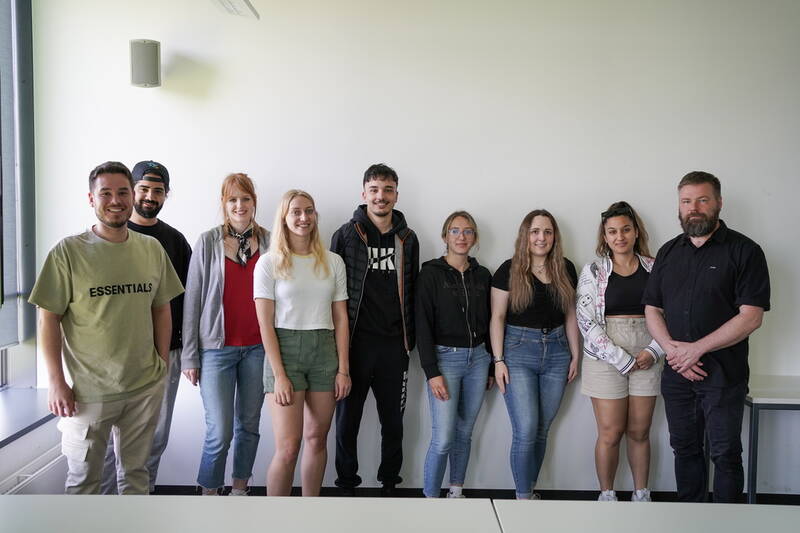
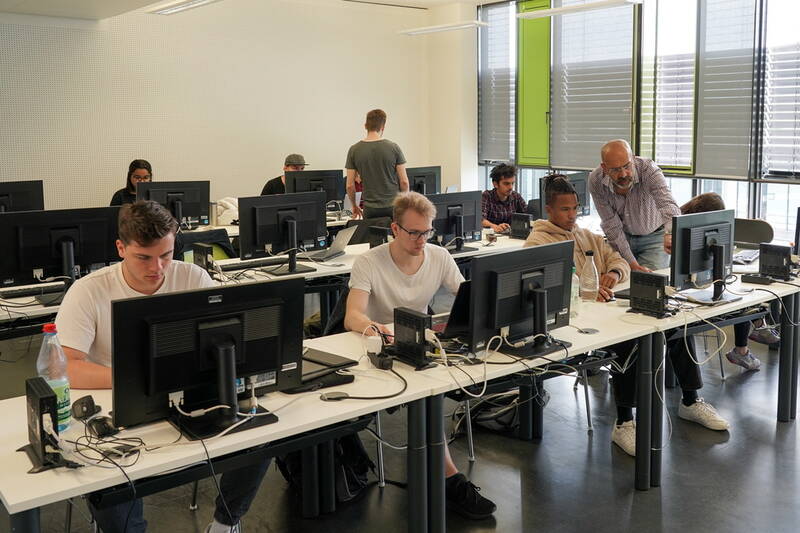
Impressions from the International Week 2022
The International Week took place from 16.05.2022 to 20.05.2022.
After a two-year break due to the pandemic, it was again possible to teach internationally in presence in 2022 (in 2020 the International Week was completely cancelled, in 2021 it was held digitally). In 2022, students of all Bachelor's programs from the sixth semester onwards could choose from four FWPMs taught by lecturers from our partner universities. The guest lecturers are already veterans. Already in previous years, we had the pleasure to welcome Dr. Mo Rezai and Prof. Dharam Shadija (Sheffield Hallam University, England), Prof. Dr. Dana Simian (Lucian-Blaga-University Sibiu, Romania), Prof. Dr. Marcel Kyas (Reykyavic University, Iceland) and Sami Lanu (LAB University of Applied Sciences, Finland) during the International Week.
Dr. Rezai and Prof. Shadija taught Advanced Web Applications, Prof. Dr. Simian taught Introduction to Machine Learning, Prof. Dr. Kyas taught Introduction to Motion Tracking and Gesture Recognition, and Sami Lanu taught Online Marketing Management. A total of about 60 students participated in the modules, which lasted from Monday, May 16 to Friday, May 20. The final exams for the modules were held on Friday.
This year, for the first time, twelve students from our partner university Sheffield Hallam University (SHU) were among the participants of the International Week. The students from the Department of Computing took part in the modules together with the FIW students as part of a short-term mobility program. The English-language course offering opens the doors for further short-term stays of this kind. The students were integrated into the modules and were able to establish contacts and friendships with the FIW students. SHU hopes to extend a return invitation as early as next year for an emerging International Week in Sheffield.
This year, FIW was once again able to present itself as a cosmopolitan host for guests from all over the world with the International Week - and bring the world into our seminar rooms. All in all, a wonderful, albeit work-intensive week for all involved, which, as always, was over far too quickly.
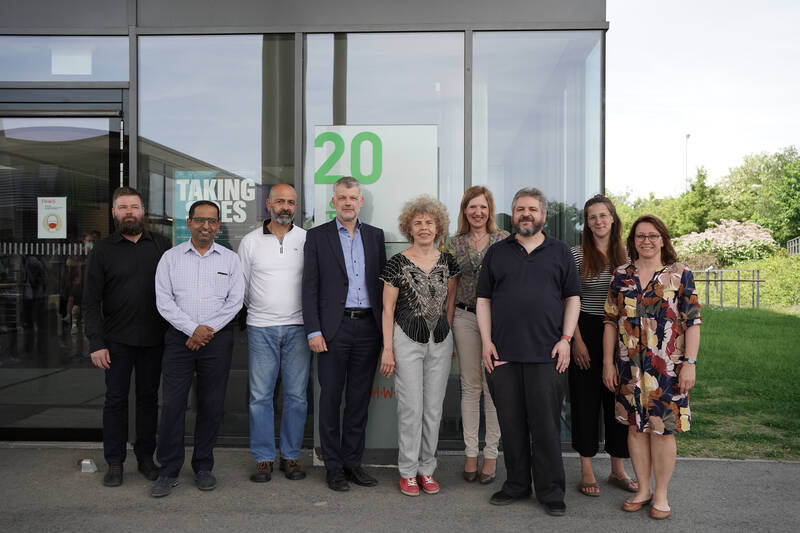
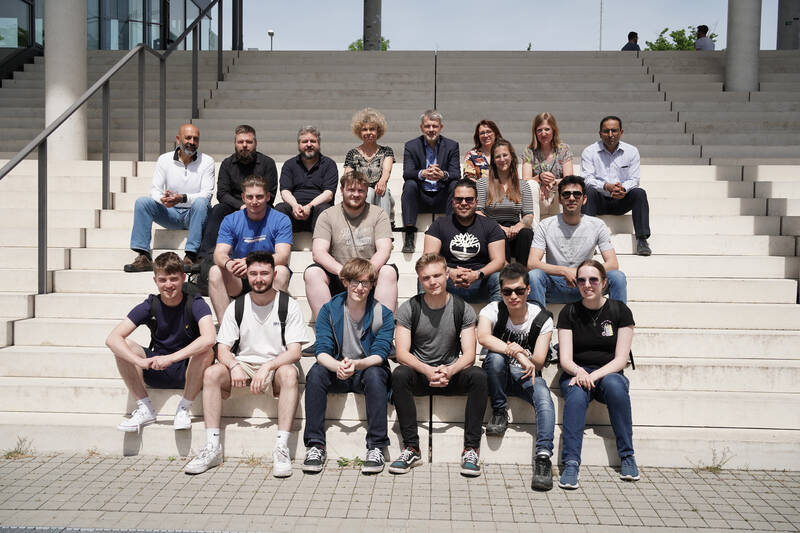
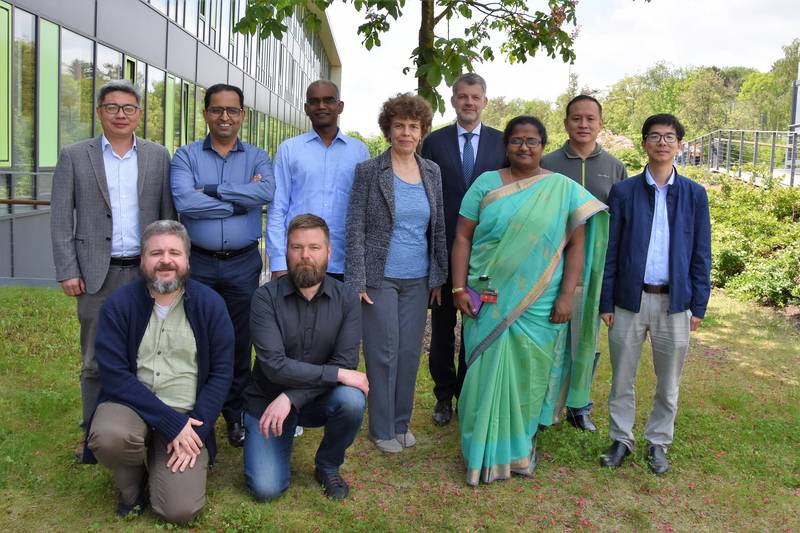
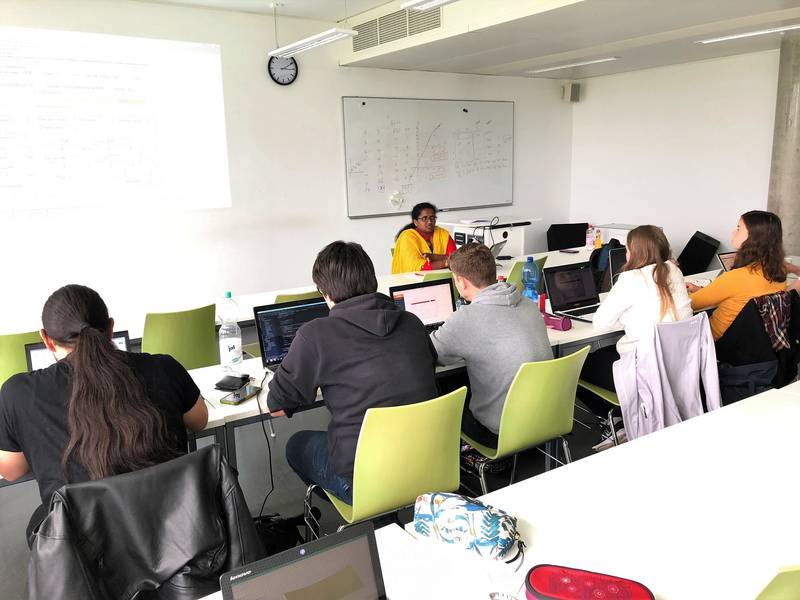
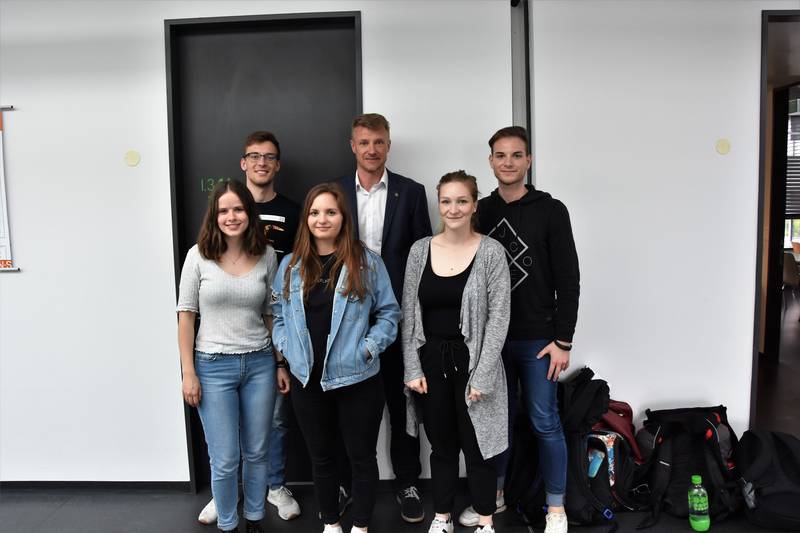
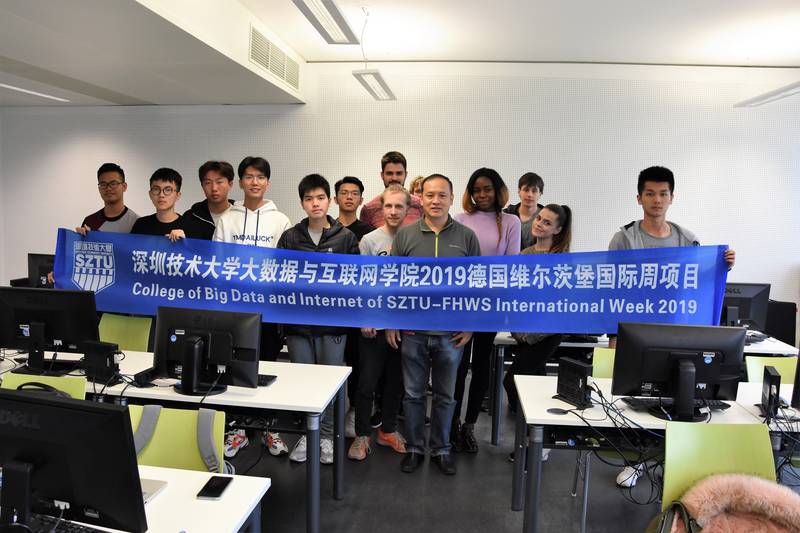
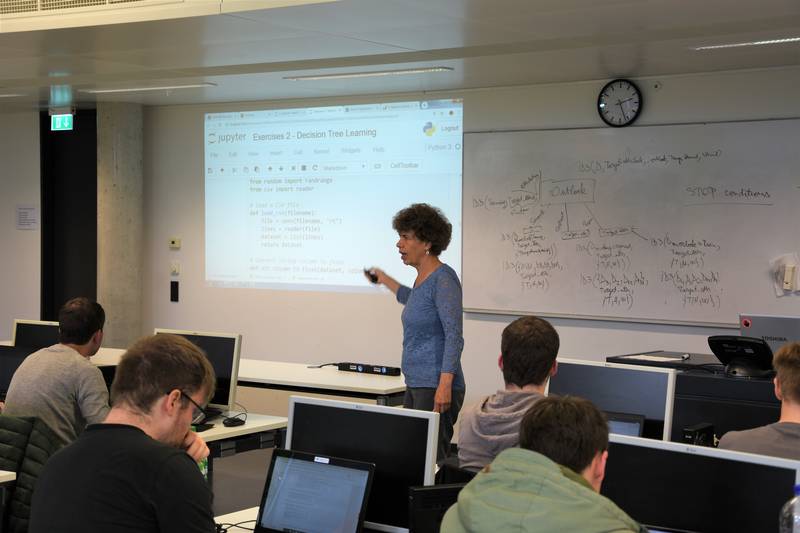
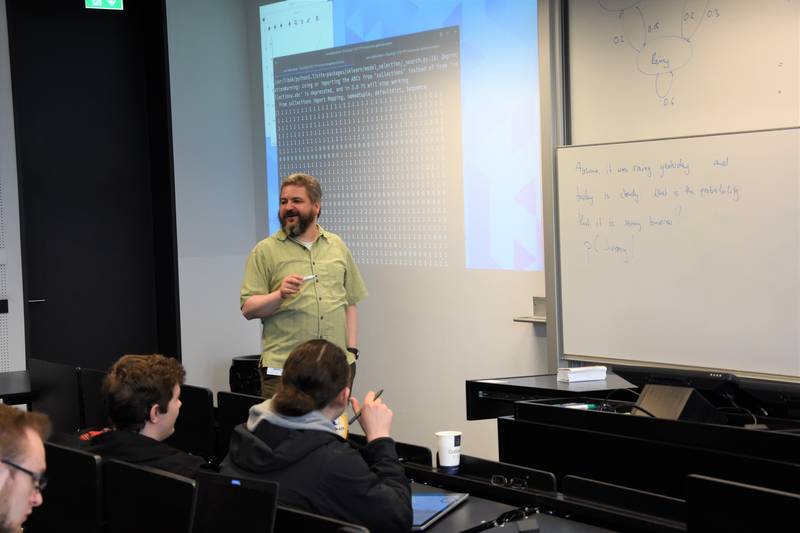
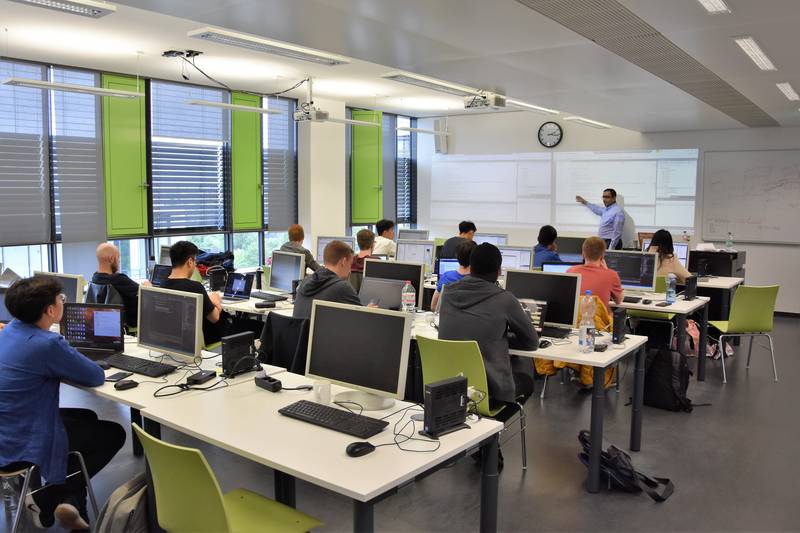
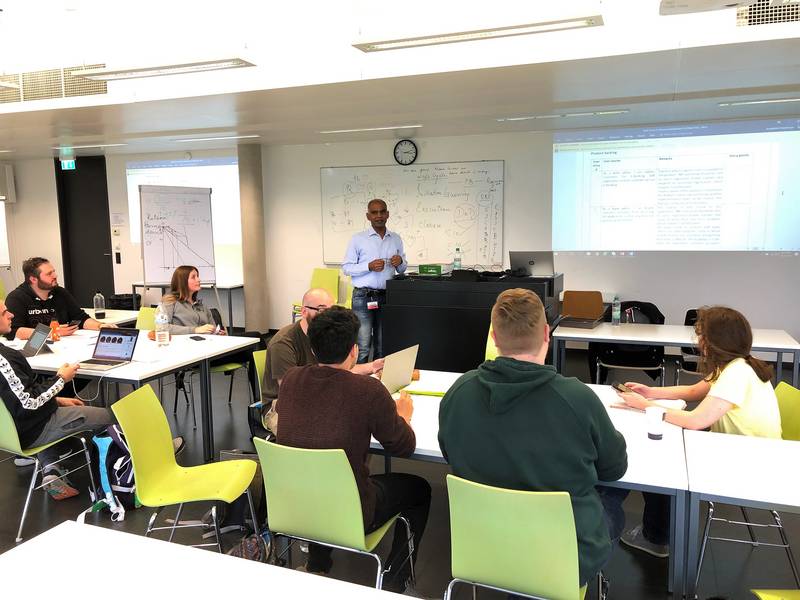
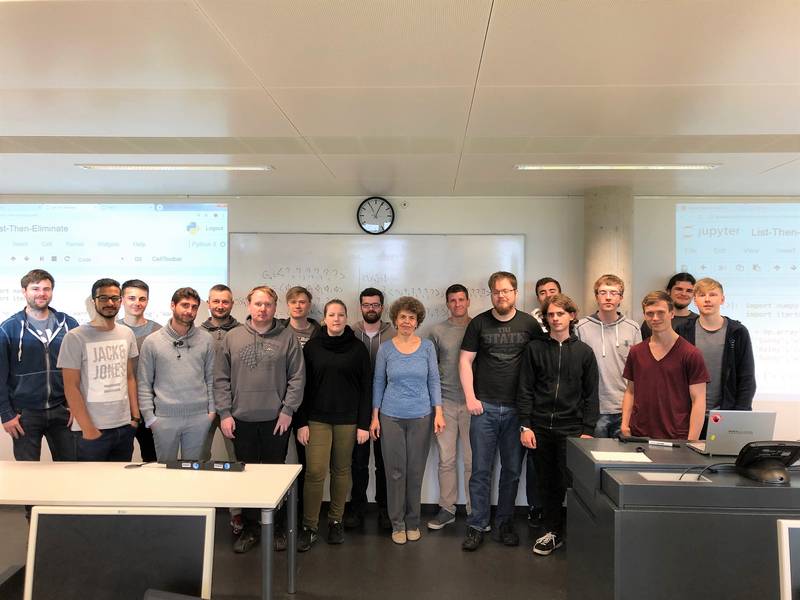
Impressions from the International Week 2019
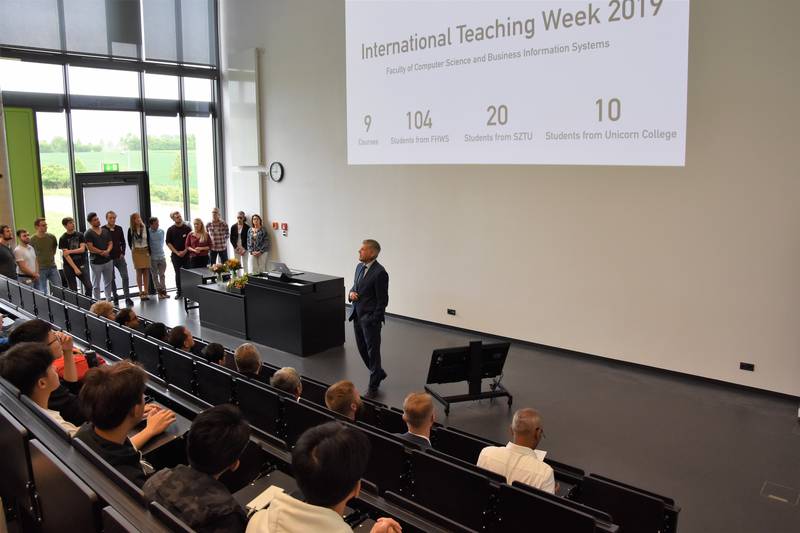
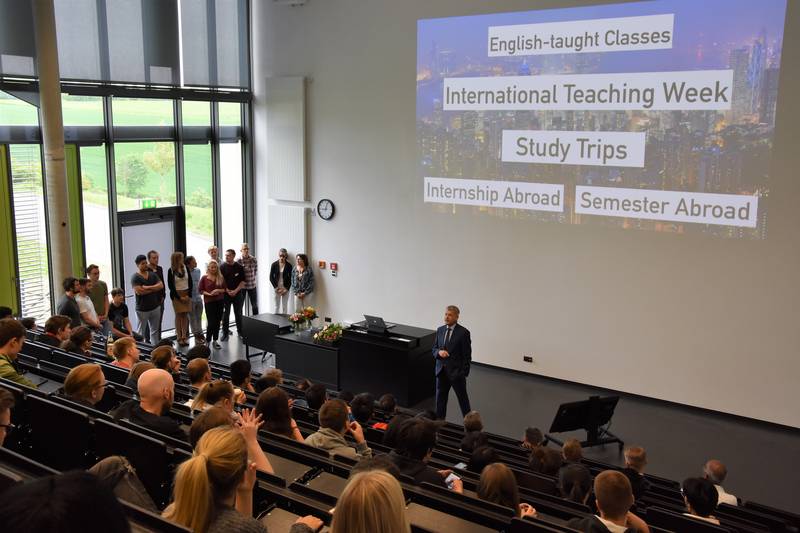
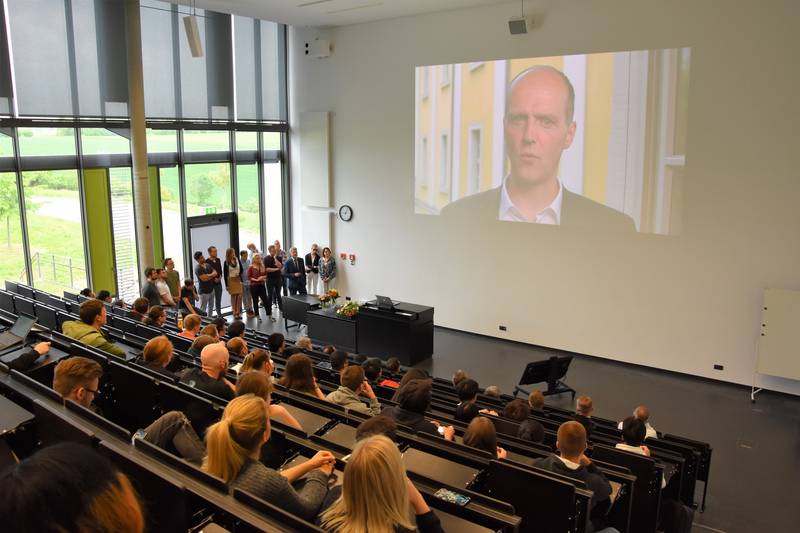
In 2020, the International Week was cancelled university-wide due to the Corona Pandemic. Therefore, you can find pictures from 2019 here.
Contact
If you have any question about the International Week, please contact the Faculty’s international affairs officer, Prof. Dr. Peter Braun.